Harry Bailey is a technology and delivery leader who specialises in turning agency project chaos into clarity. With more than twenty years of experience as a developer, agency founder and fractional CTO, he helps digital and creative agencies build stronger engineering and delivery cultures and improve commercial outcomes. He focuses on practical, immediately actionable strategies, not theory, so teams can ship work on time and with less drama.
More categories. More ceremonies. More tables to buy. More reasons to attend.
And somewhere along the way, it becomes reasonable to ask:
What are we awarding anyway?
Because when you look closely, the volume starts to dilute the meaning. Not always, but often enough that agency leaders are weighing the effort, cost, and value with more scrutiny than before.
This is not really about whether awards are good or bad. It is about whether they still make sense. And when they actually serve the agency, rather than the other way around.
The growing weight of awards
For established agencies, awards tend to appear at a particular stage.
You have strong clients. The work is good. The team is proud of what they are producing.
Not the obvious ones. The quieter spaces where something is missing, but the system still appears to function. Where people are busy, well intentioned, and doing their best, while quietly compensating for something nobody has named.
One of those gaps became very clear in a process I was asked to spend some time with recently.
The business had done what it believed was the responsible thing. Time and care had gone into producing a detailed specification internally. Requirements were thought through. Edge cases captured. Decisions signed off. On paper, it looked solid.
And yet, the same questions kept resurfacing. Clarifications. Reinterpretations. Small misunderstandings that did not feel serious enough to escalate, but persistent enough to slow things down. Nothing dramatic. Just enough friction to make the work heavier than it needed to be.
It would have been easy to pin that on execution. Or communication. Or individuals not reading closely enough. That is usually where these conversations drift.
But sitting with it for a while, something else felt off.
The specification was doing its job inside the business. It created confidence. It reduced perceived risk. It allowed decisions to move forward. Once it crossed the boundary to the delivery team, though, it became something different. A document to interpret. To infer from. To work around.
I recently moved from Monosnap to Shottr for screenshots on my Mac. Shottr has a whole lot going for it, and it was the right move, but the biggest frustration was how to open images in Shottr quickly.
In Monosnap I almost always dragged the existing image from a browser, or Finder onto the menubar icon. Monosnap would show a little drop zone, you dropped your image file and Monosnap would review it in a new window. Shottr doesn’t yet allow dropping onto the menubar icon.
Also, shottr has a lot of shortcut key options, but none of them are ‘Load from Clipboard’. This is only available via the options list. So my clumbsy workflow was… right click and copy an image, click Shottr menubar icon, move down to ‘More’ then move down and click ‘Load from Clipboard’.
I decided there had to be a better way which allowed drag-and-drop, and after a little whle trying things out I found it.
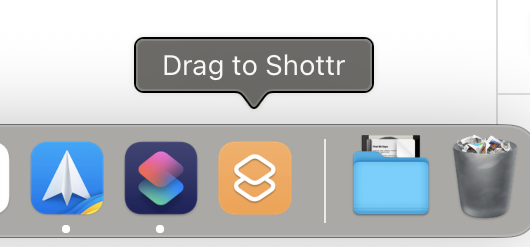
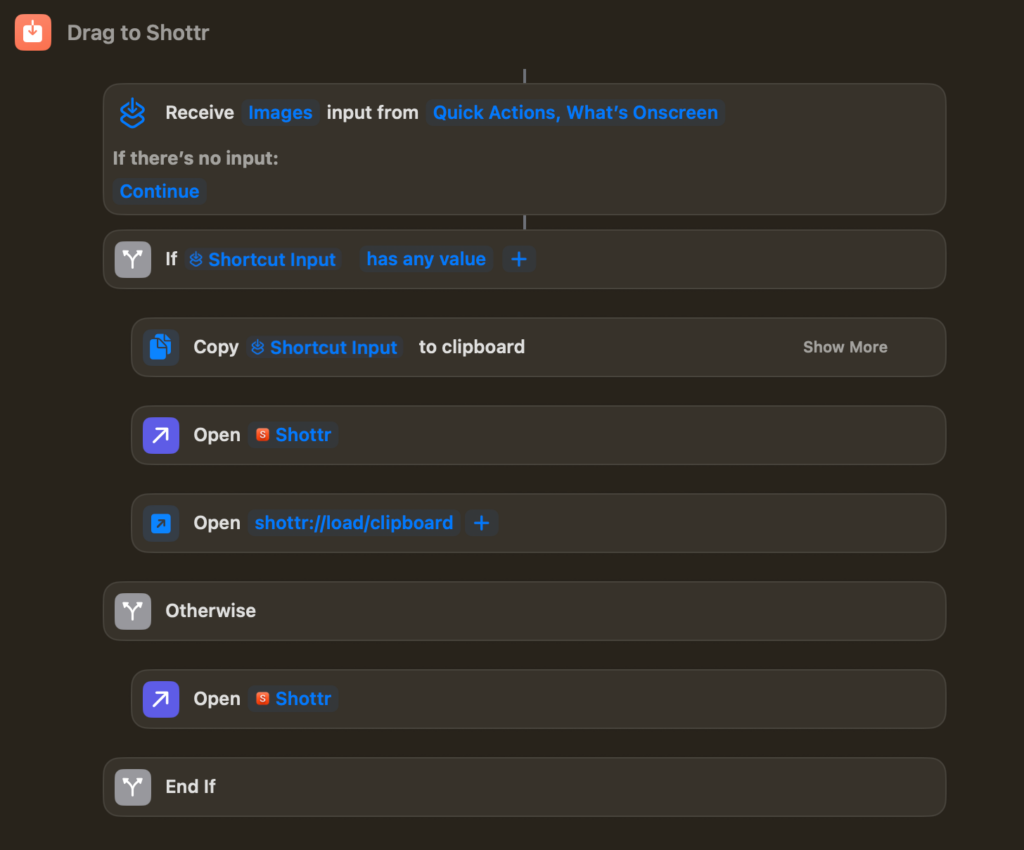
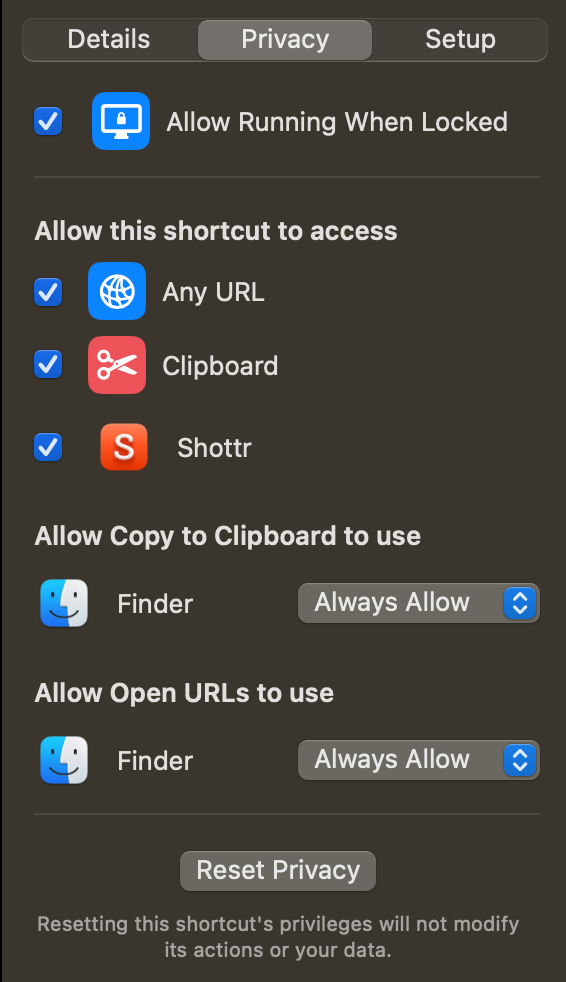
Using the Shortcuts app in MacOS you can create a dock icon which receives the dropped image, copys it to the clipboard then triggers Shottr to open from clipboard.
It uses a combination of standard items, like copy to clipboard, open app, and trigger local app url scheme destinations.
Once you have the Shortcut built (or installed), click ‘File => Add to dock’ in the menu bar. If you make any changes to the app you might need to remove the existing app from the dock before using ‘Add to dock’ again.
You should now be able to drag any valid image to the new shortcut dock icon and after a second or two it will open in Shottr.
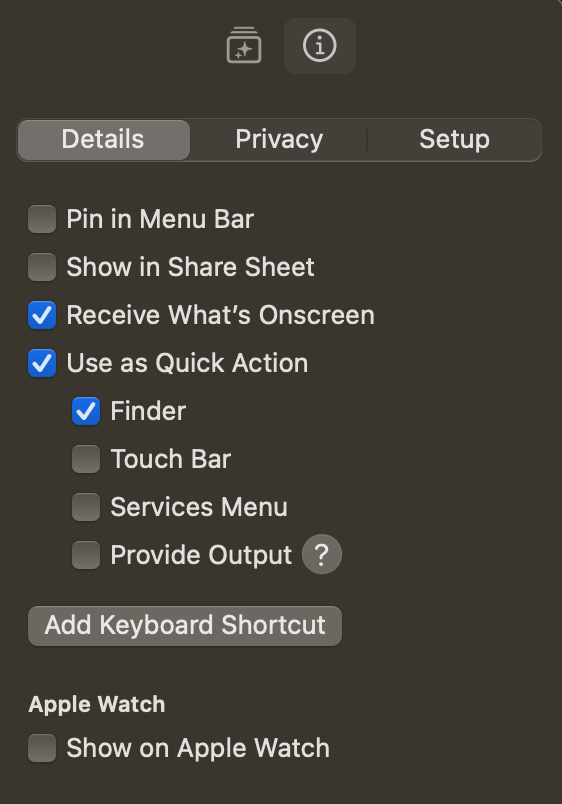
If you want to set it up from scratch, here are screengrabs of the Details and Privacy tabs. You might have to run inside Shortcuts with the play icon to give permissions before it functions correctly.
You can let me know if:
‘Allow running when locked’ can be unchecked
‘Receive what’s on screen’ can be unchecked
You truly need to trigger open Shottr before triggering the open clipboard url
Helpful? Say thank you.
Help me keep these guides up to date by showing your apprechiates with a small donation. Scan the QR code below, or buy me a coffee here.
I keep noticing how much effort agencies put into every client interaction. Everything is treated as high stakes, high touch, and deeply personal.
It comes from a good place. No team wants to feel like they are giving clients a thin or automated experience.
But over time I’ve started to question whether all of that effort is actually valuable.
Some interactions genuinely benefit from care and judgement. Others mainly need to be accurate and delivered when promised.
When those two types of interaction get treated the same way, it usually causes problems. Senior people get buried in admin, and the moments that really need judgement get squeezed.
When delivery starts to feel harder than it should, most agency leaders do the same thing. They look for clarity.
Not a reset. Not a wholesale change. Just something sensible to read that might explain why plans keep slipping, why outcomes still surprise people, and why teams feel busy without things becoming more predictable.
So they search for a guide. Often something like “mastering agency project management in 2026”.
What they find looks reassuring. Long, confident, recently updated. Full of methods, tools, templates, and best practice. It reads like a comprehensive answer to a complicated problem.
It feels current. It feels responsible. It feels like the right thing to be reading and taking action on.
Months pass. Planning is still slow. Risks are noticed early but only discussed once they start affecting delivery. Outcomes still surprise people who believed they had done the right preparation.